
This orientation sets the standard for everything that follows: the driver's mission, the federal, state and district rules that govern school and commuter buses, what professionalism and discipline mean when students and riders are aboard, and how emotional responses to hazardous weather affect vehicle control.
Welcome
Welcome to Excell PDT Professional Driver Training, School Bus and Commuter Bus Driver Training for Hazardous Weather Operations. This training is designed for student and passenger transportation in school districts, colleges, and university transportation programs. The work is serious because every trip carries people who depend on your judgment. Throughout this course, we will focus on the professional habits, vehicle knowledge, and route decisions that help you operate safely when weather conditions change.
Let’s begin with the standard that precious cargo requires.
Agenda
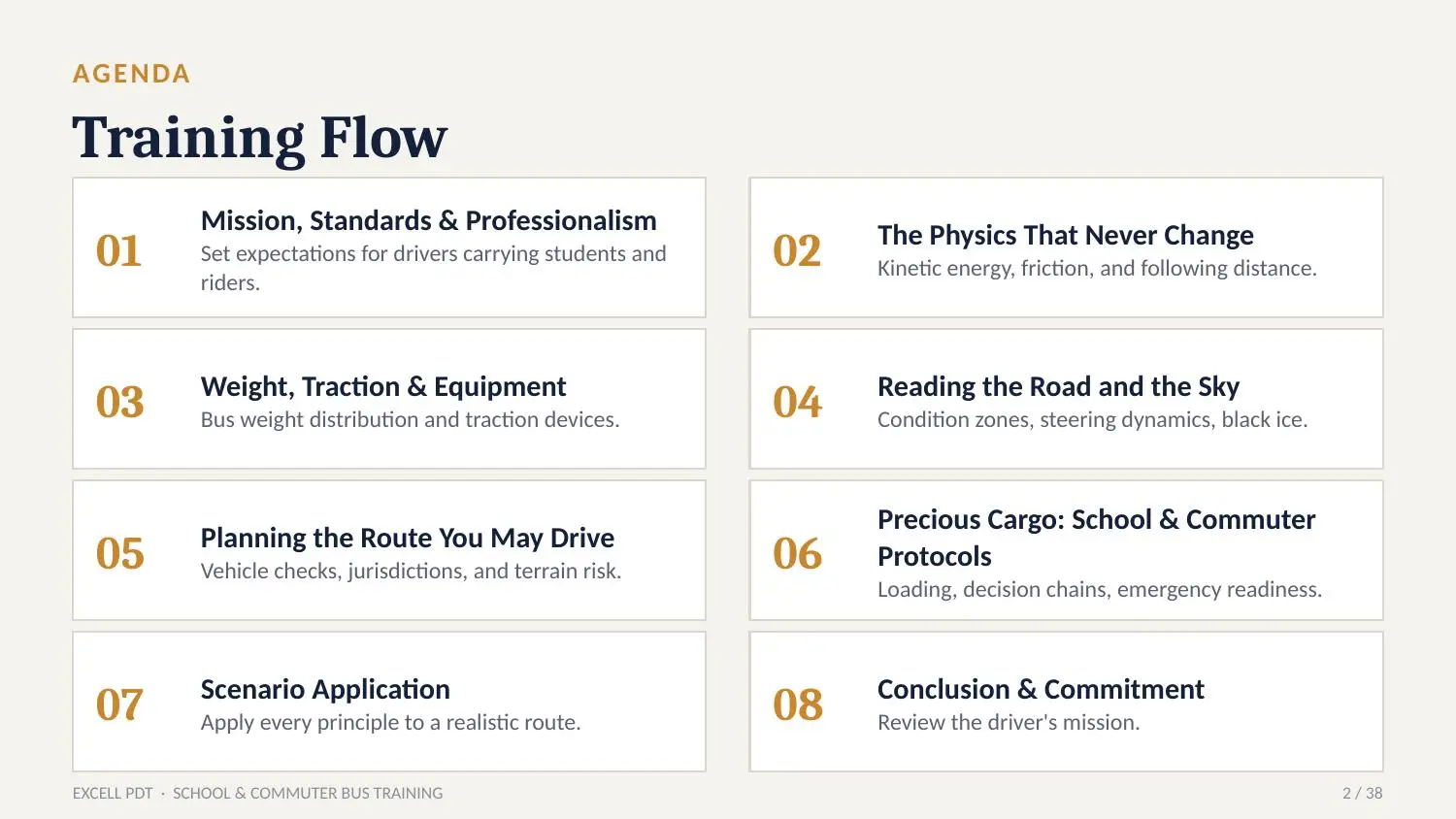
This course follows a practical training flow. We will begin with your mission, the standards that guide professional drivers and the discipline expected when students and riders are on board. Then we will cover the physics that never change, including kinetic energy, friction, and following distance. From there, we will work through weight, traction, equipment, road and weather conditions, and the route planning that must happen before departure.
We will also cover school and commuter protocols for loading, decision making, and emergency readiness. Finally, you will apply the principles to a realistic route scenario and return to the driver’s mission.
Mission
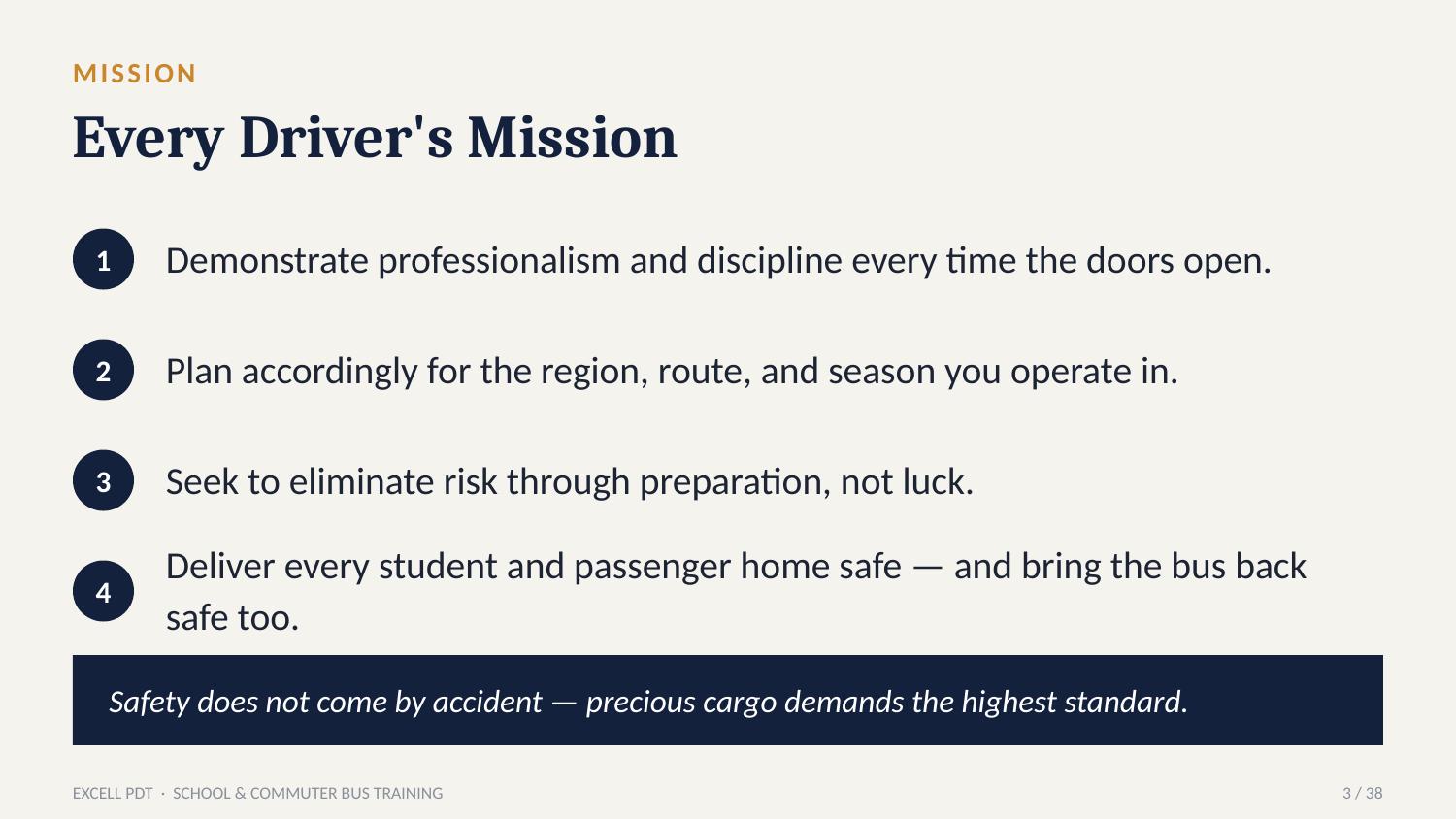
Every time the doors open, your mission begins again. Demonstrate professionalism and discipline on every trip, not only when the weather is severe. Plan for the specific region, route, and season where you operate. Your goal is to eliminate risk through preparation, never luck. That means thinking ahead about the vehicle, the roadway, the forecast, and the people depending on you.
The outcome is simple but demanding. Deliver every student and passenger home safe, and bring the bus back safe too. Safety does not come by accident. When you carry precious cargo, the standard has to be the highest one.
Standards
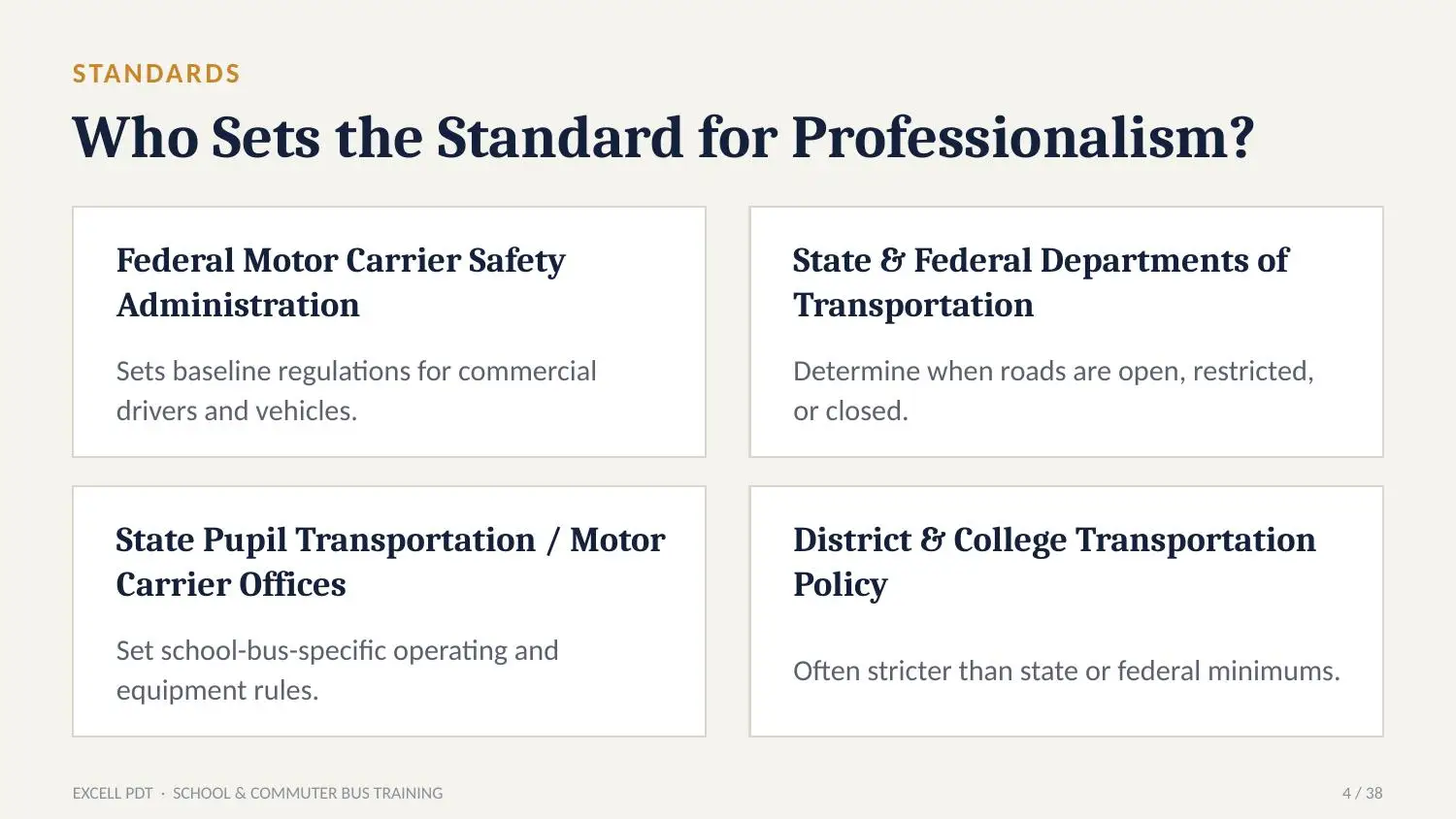
Professional standards come from several places, and you are responsible for understanding how they work together. The Federal Motor Carrier Safety Administration sets baseline regulations for commercial drivers and vehicles. State and federal departments of transportation determine when roads are open, restricted, or closed. State pupil transportation or motor carrier offices establish school bus specific operating and equipment rules.
Then, your district and college transportation policies may set requirements that are even stricter than the state or federal minimums. Do not assume that meeting one standard ends the job. Know the rules that apply to your vehicle, route, passengers, and operating organization.
Definitions
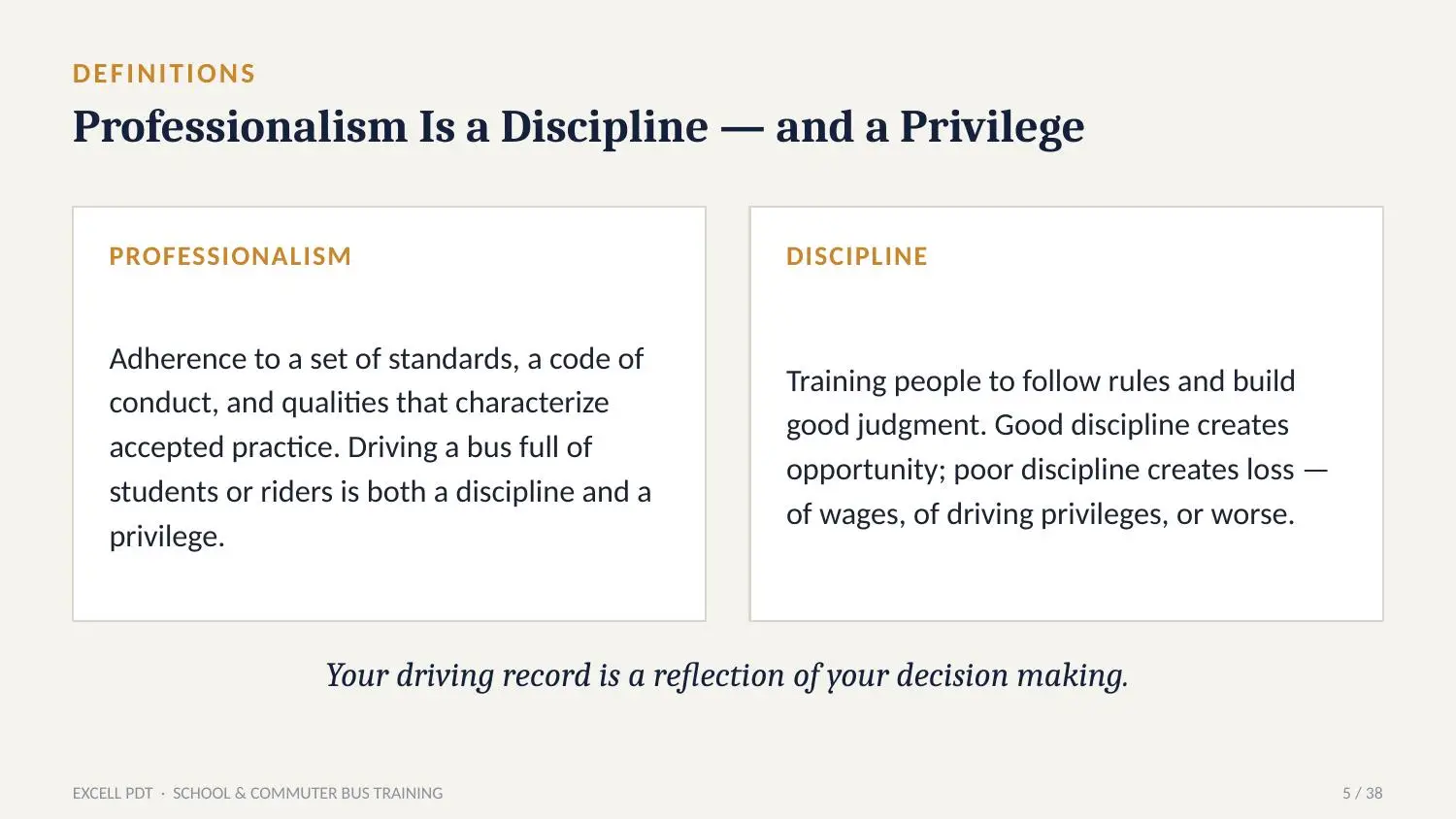
Professionalism is adherence to standards, a code of conduct, and the qualities that define accepted practice. Driving a bus full of students or riders is both a discipline and a privilege. Discipline is the training that teaches people to follow rules and build good judgment, especially when conditions create pressure. Good discipline creates opportunity. Poor discipline can create loss.
Loss of wages, loss of driving privileges, or worse. This is not an abstract idea. Your driving record is a reflection of your decision-making. The choices you make before and during a hazardous weather route show whether you are protecting the privilege of this work.
Human Factors
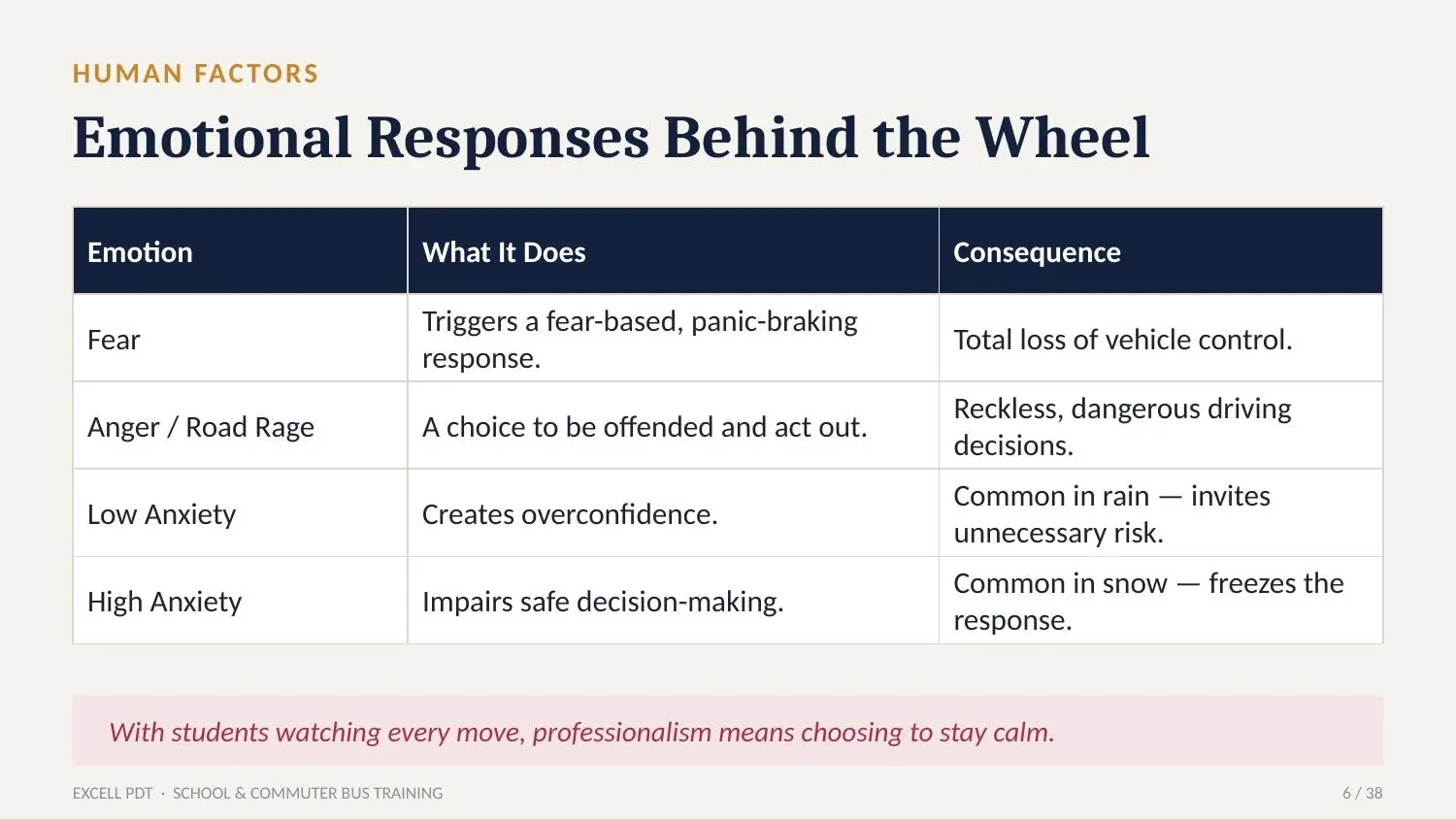
Hazardous weather can trigger emotional responses and each one can affect vehicle control. Fear can lead to panic braking and a total loss of control. Anger or road rage is a choice to be offended and act out, which produces reckless and dangerous driving decisions. Low anxiety can create overconfidence. It is common in rain and can invite unnecessary risk. High anxiety can impair safe decision making.
It is common in snow and can freeze your response. Students and riders are watching every move you make. Professionalism means recognizing the emotion, choosing to stay calm and driving the bus rather than letting the emotion drive you.