
This module covers the heightened standard of care owed to students and riders, safe loading and unloading in hazardous weather, the decision chain for a delay, detour or cancellation, communication and emergency preparedness, a realistic morning fog route scenario, and a restatement of every driver's mission.
Precious Cargo
We now turn to the responsibility that makes every weather decision more important. Precious cargo. Students and riders raise the standard of care above any other cargo. They depend on your preparation at the curb, on the road, and when the route no longer goes as planned. In this final operating section, we will cover the heightened standard expected of school and commuter bus drivers, safe loading and unloading in hazardous weather, the decision chain for delay, detour, or cancellation, and the communication and emergency readiness that protect passengers when conditions change.
A Heightened Standard of Care
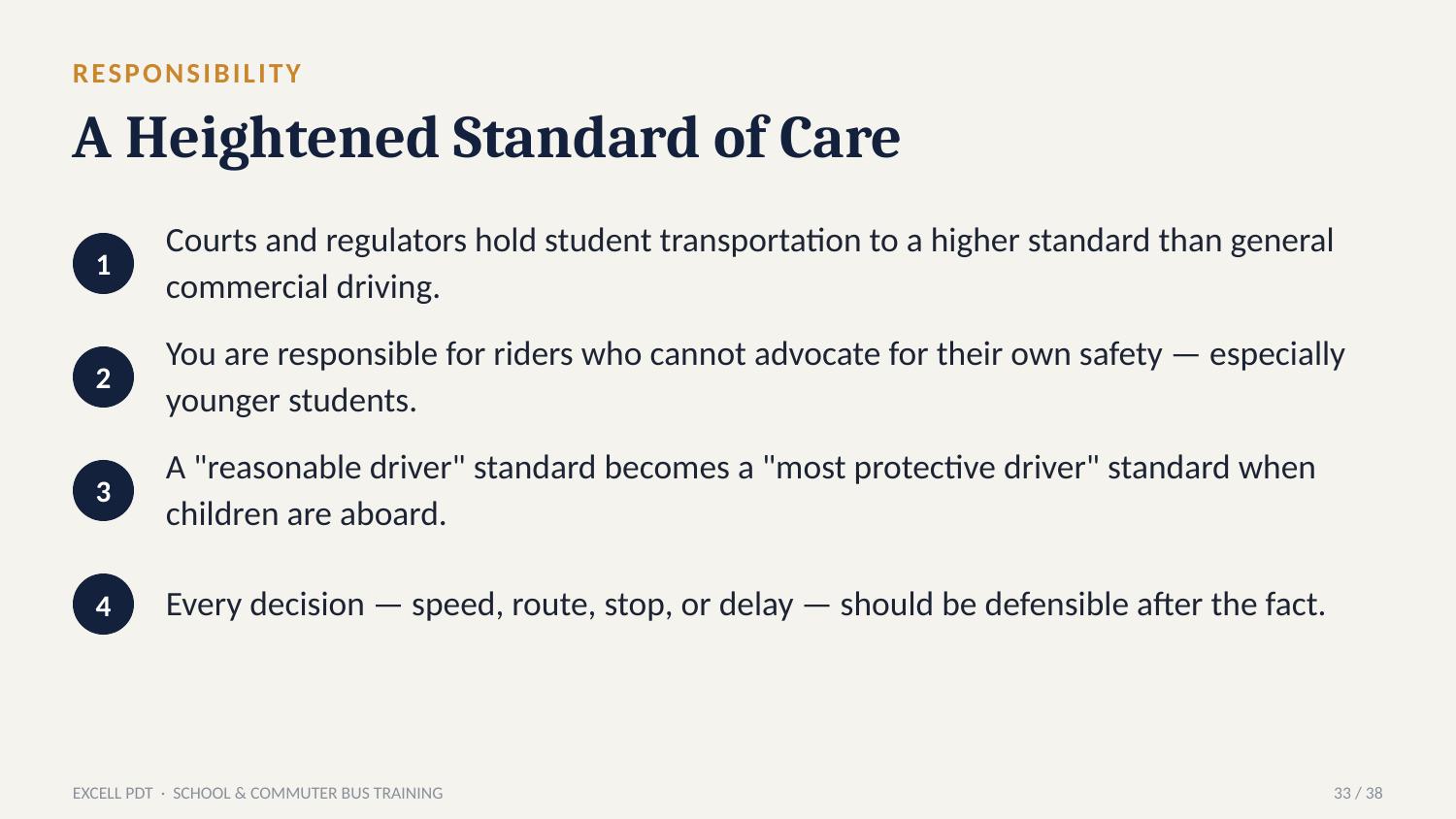
Student transportation is held to a heightened standard of care. Courts and regulators expect more than the standard applied to general commercial driving. You are responsible for riders who may not be able to advocate for their own safety, especially younger students. When children are aboard, a reasonable driver standard becomes a most protective driver standard. That means every decision about speed, route, stop, or delay should be defensible after the fact.
Ask yourself whether the choice protects the people who are relying on you, not whether it merely keeps the route moving. In hazardous weather, the safest defensible decision is often the most professional one.
Loading and Unloading in Hazardous Weather
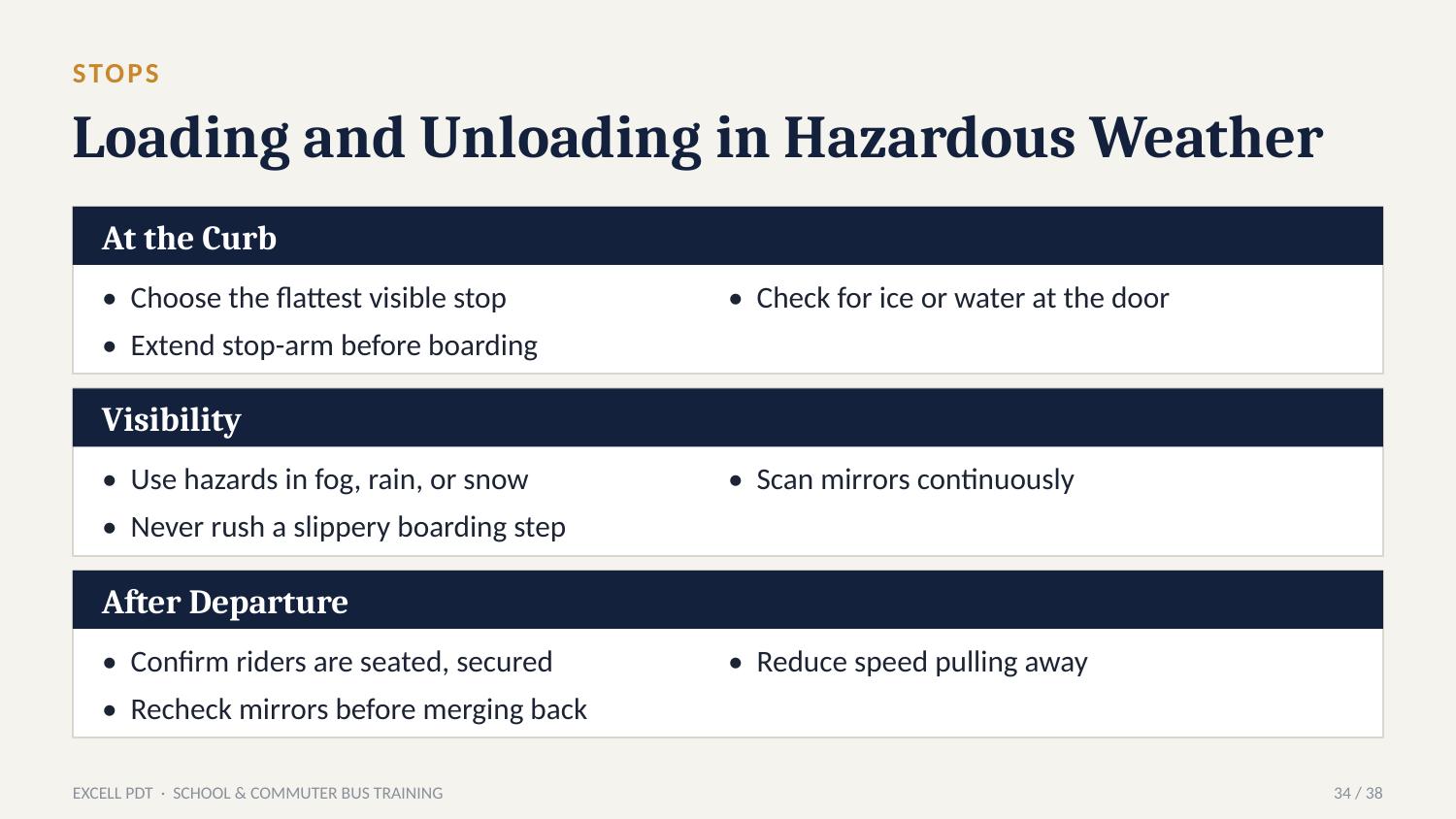
Loading and unloading require extra care when weather makes the stop hazardous. At the curb, choose the flattest visible stop, check for ice or water at the door, and extend the stop arm before boarding. In fog, rain, or snow, use hazards and scan mirrors continuously. Never rush a slippery boarding step. After departure, confirm riders are seated and secured, reduce speed as you pull away, and recheck mirrors before merging back into traffic.
A stop is not complete when the door closes. The driver remains responsible for the surface around the bus, visibility to other traffic, passenger movement, and the safe transition back into the lane.
Delay, Detour, or Cancel?
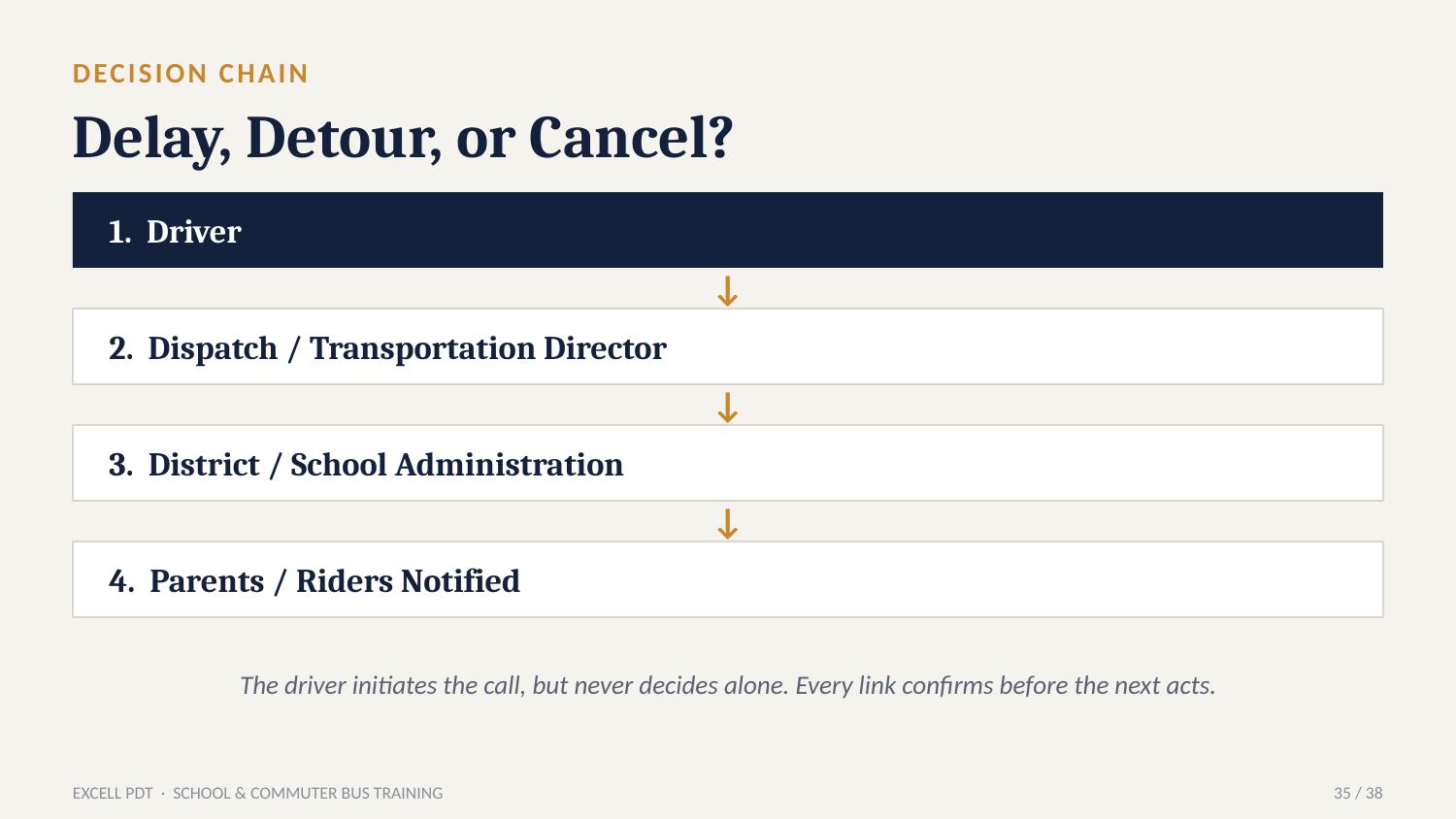
When weather creates a decision to delay, detour, or cancel, follow the decision chain. Step one is the driver. You initiate the call when conditions are no longer safe. Step two is dispatch or the transportation director. Step three is district or school administration. Step four is parents or riders notified. The driver initiates the call but never decides alone. Each link confirms before the next one acts.
This process keeps a weather decision from becoming a solo judgment made under pressure. Communicate the conditions clearly, use the established chain, and allow the organization to notify the people who need to know before the route changes or stops.
Communication & Emergency Preparedness
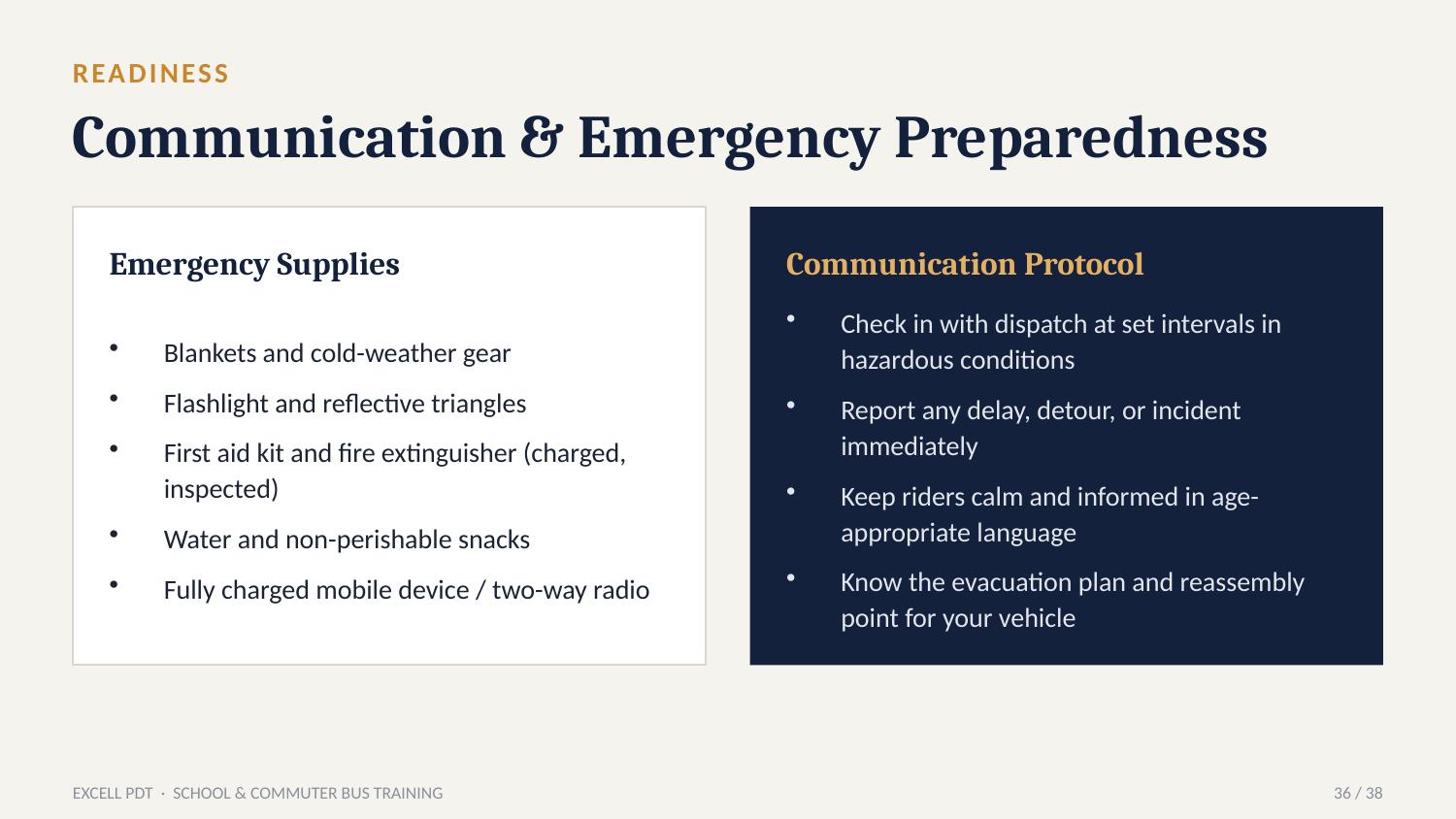
Emergency readiness begins with supplies and communication. Keep blankets and cold weather gear, a flashlight and reflective triangles, a charged and inspected first aid kit and fire extinguisher, water and non-perishable snacks, and a fully charged mobile device or two-way radio. In hazardous conditions, check in with dispatch at set intervals. Report any delay, detour or incident immediately.
Keep riders calm and informed using age-appropriate language. You must also know the evacuation plan and reassembly point for your vehicle. The goal is to prevent an operational delay from becoming a passenger emergency. Equipment, information and calm communication give you the ability to manage the unexpected.
Scenario: The Morning Fog Route
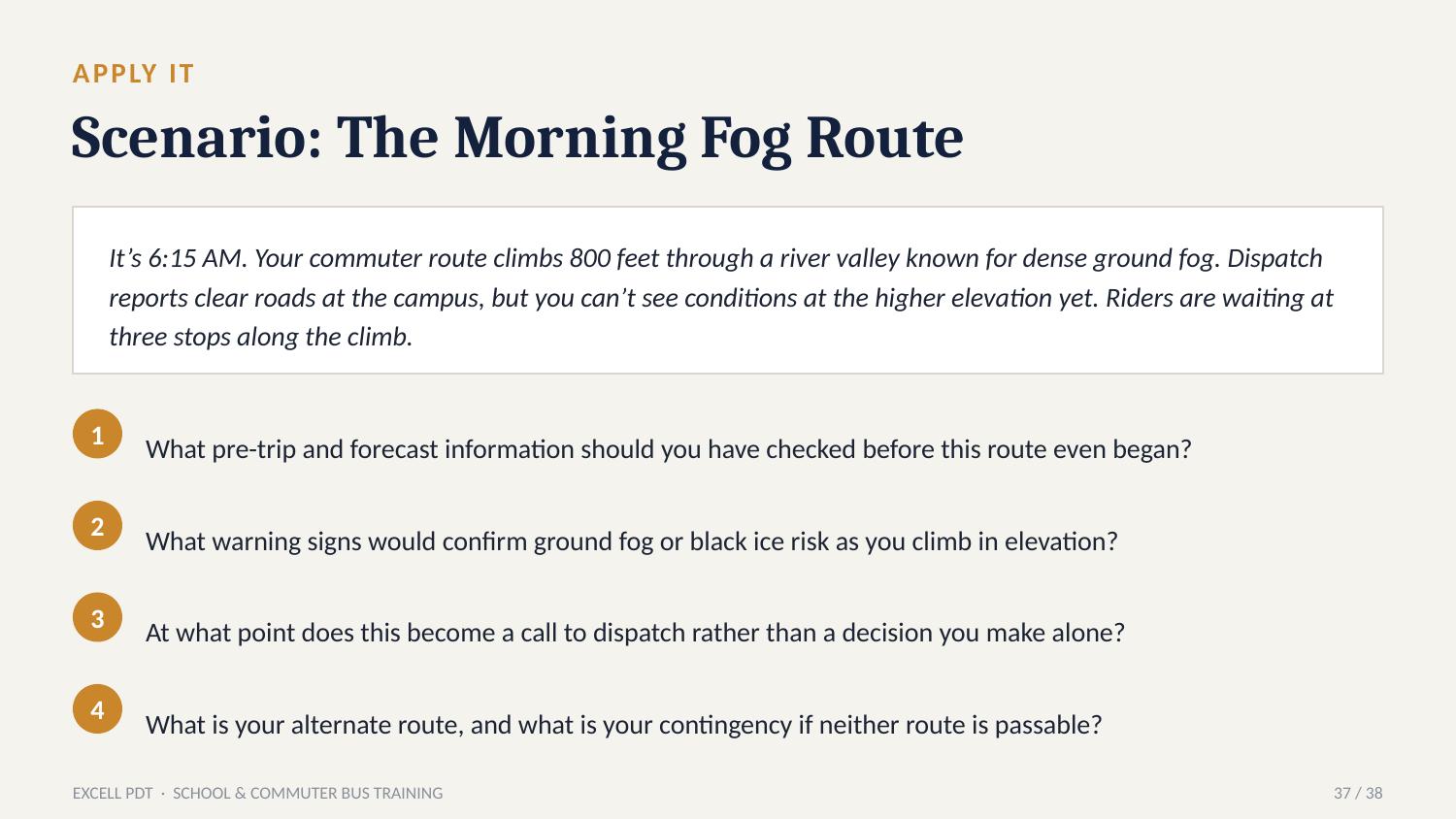
Consider this route scenario. It is 6:15 in the morning, and your commuter route climbs 800 feet through a river valley known for dense ground fog. Dispatch reports clear roads at the campus, but you cannot yet see conditions at the higher elevation. Riders are waiting at three stops along the climb. Before the route began, what pre-trip and forecast information should you have checked?
As you climb, what warning signs would confirm ground fog or black ice risk? At what point does this become a call to dispatch instead of a decision you make alone? Finally, what is your alternate route, and what is your contingency if neither route is passable? Use the full planning process, not a guess.
Every Driver's Mission, Restated
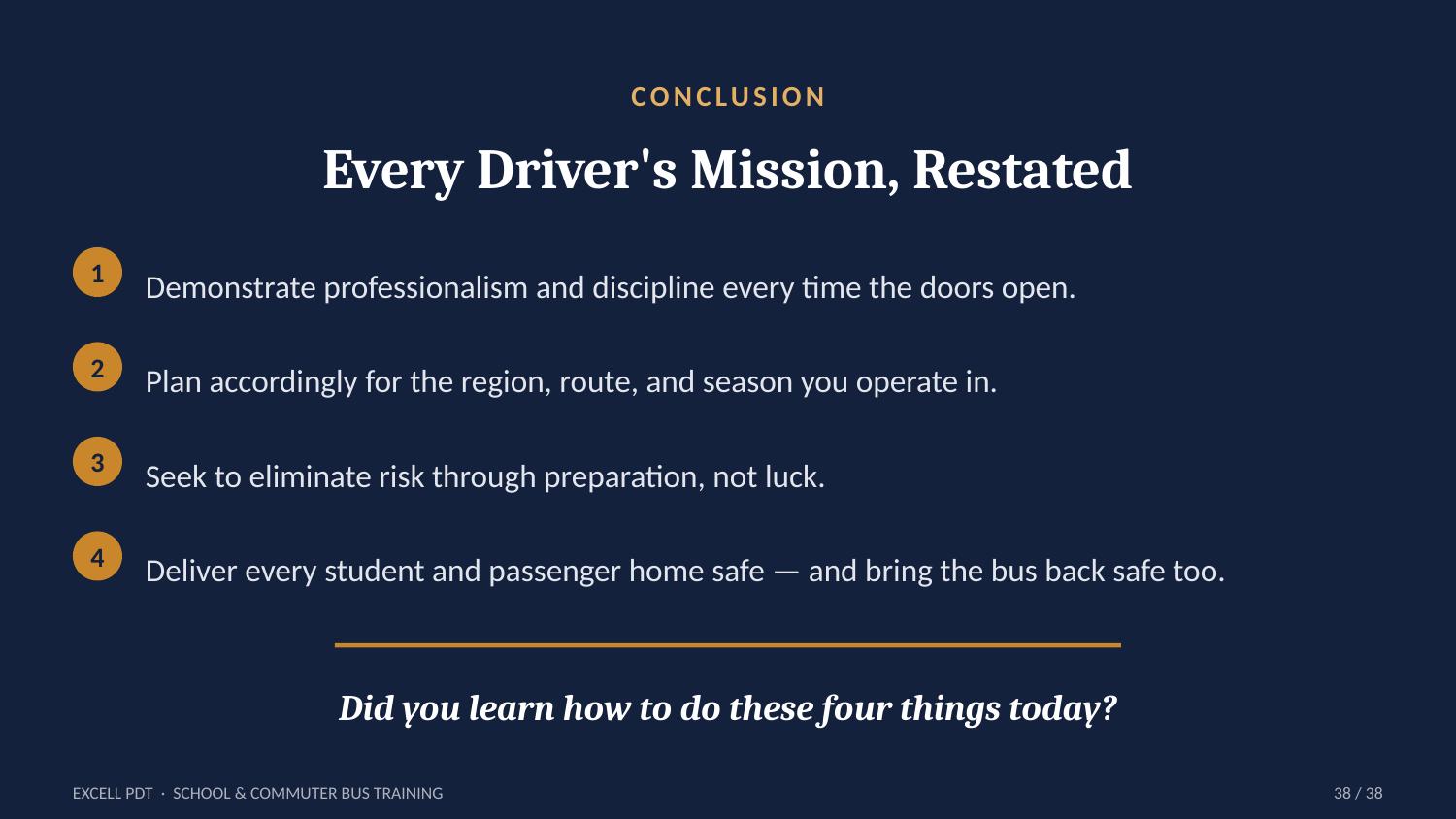
Let’s restate every driver’s mission. Demonstrate professionalism and discipline every time the doors open. Plan for the region, route and season where you operate. Seek to eliminate risk through preparation, not luck. Deliver every student and passenger home safe and bring the bus back safe too. Those four commitments are not reserved for the worst storm. They guide every trip because hazardous weather readiness is built through daily habits and sound judgment.
Ask yourself whether you can do these four things every day. That is the standard precious cargo deserves and the commitment that defines a professional driver.