This module teaches drivers to match their response to five weather zones, recognize the skid they are in, set up for corners and bridges before entering them, and spot the warning signs of black ice before it announces itself.
Reading the Road and the Sky

The next skill is reading the road and the sky. Every driving condition zone demands its own response. The condition may be rain, light snow, high wind, ice covered roads or heavy snow, and the right response changes with the hazard. You will learn to adjust speed, space, traction preparation and visibility expectations before the bus reaches the worst part of the route. The key is to recognize that weather is not one condition for an entire trip.
Road surface, wind, elevation and visibility can change block by block so your driving plan must change with them.
Five Zones, Five Responses

Match your response to the zone you are driving in. On rain or wet roads, reduce speed, increase following distance, and watch for standing water. In light snow, verify traction before accumulation builds, and use gradual, gentle movements on the steering wheel, brake, and accelerator so the tires do not suddenly lose the grip they still have. In high wind, profile the vehicle. High profile, no weight, and high wind is a no-go.
On ice-covered roads, confirm chain law status and extend the degree of fault margin. In heavy snow, operate at 30 mph or less with chains and follow the visual driving rule at all times.
Know the Skid You're In
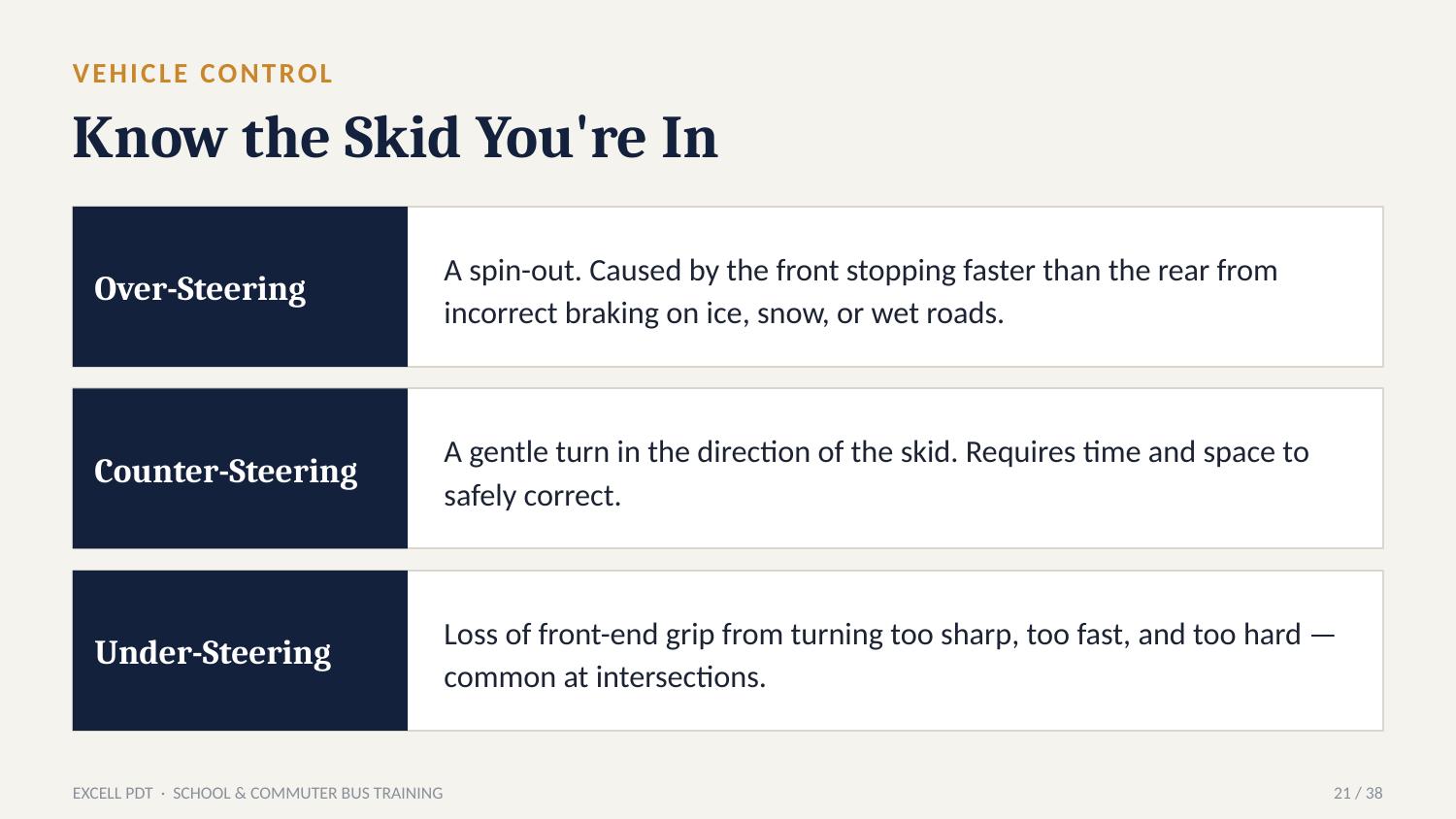
You need to know what kind of skid you are in before you can respond correctly. Over-steering is a spin-out caused when the front stops faster than the rear because of incorrect braking on ice, snow, or wet roads. Counter-steering is a gentle turn in the direction of the skid. It requires time and space to correct safely, which is why following distance matters so much. Under-steering is a loss of front-end grip from turning too sharp, too fast, and too hard.
It is common at intersections. These are not problems to solve with panic or sharp inputs. Recognize the loss of traction, stay smooth, and use the room you built before the skid began.
Corners and Bridges Multiply Forces Fast

Corners and bridges multiply forces quickly, so set up for them before you enter. Correct cornering requires only two factors, road surface and steering. Enter slowly enough that you never need to transfer weight or brake in the middle of the turn. At bridges and overpasses, approach slowly, take your foot off the throttle, and aim straight across. Expect the bounce at the expansion joint.
Because bridge surfaces have no ground beneath them to hold heat, they can run roughly 10 to 20 degrees Fahrenheit colder than the approach road and freeze first. Treat every bridge as a location where grip can change before the rest of the roadway does.
The Ice You Can't See Coming
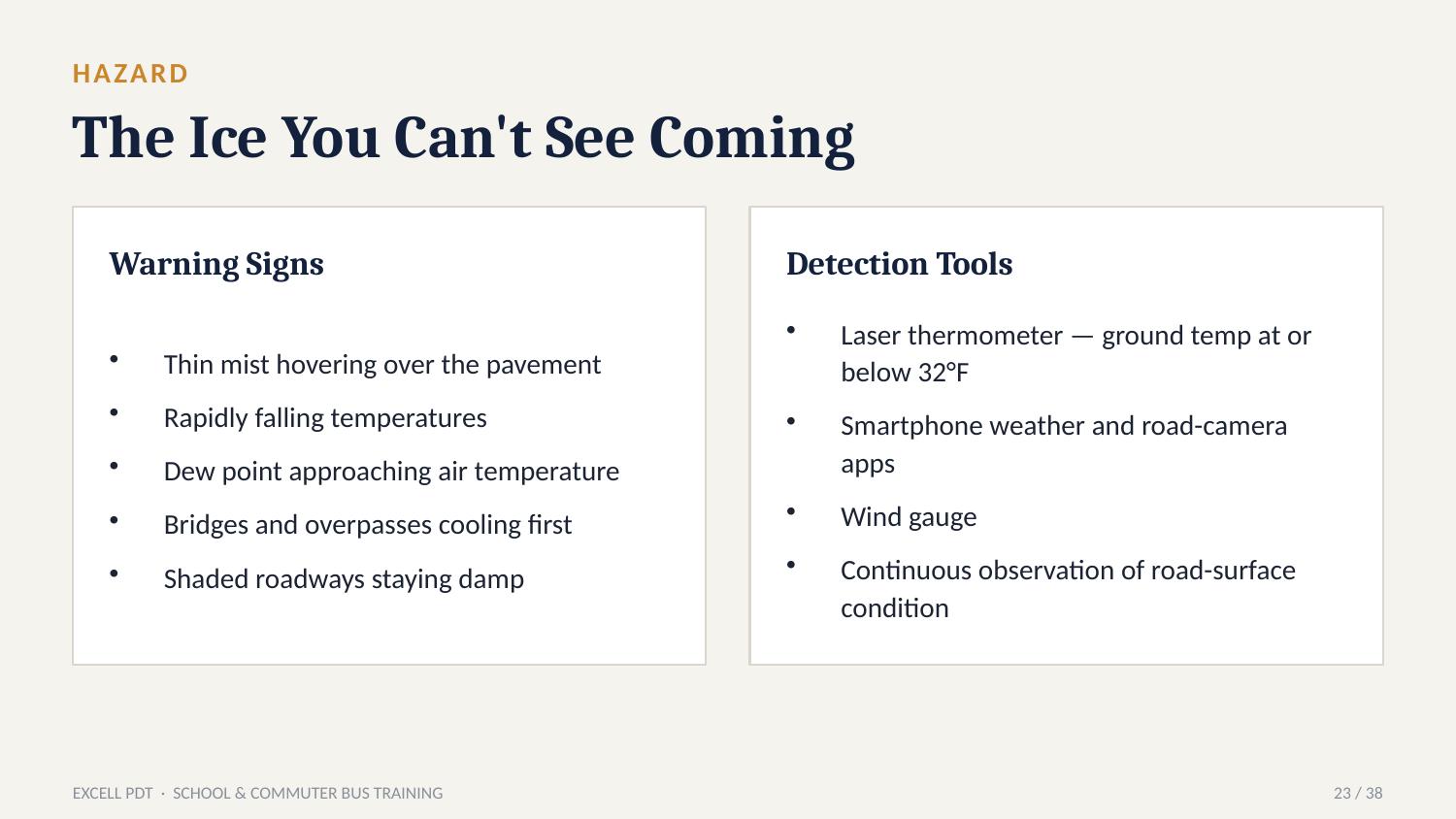
Black ice is dangerous because it can arrive with little warning. Watch for thin mist hovering over the pavement, rapidly falling temperatures, a dew point approaching air temperature, bridges and overpasses cooling first, and shaded roadways that stay damp. Use the tools available to confirm what you are seeing. A laser thermometer can identify ground temperature at or below 32 degrees Fahrenheit, smartphone weather and road camera apps, a wind gauge, and continuous observation of the road surface all help you make a better judgment.
Do not wait for a skid to prove the road is changing. When the warning signs line up, slow down and protect your traction before the ice becomes visible through its consequences.