
This module explains how school buses and commuter coaches carry their weight, why traction devices are part of pre-season preparation, the two external forces you cannot control, the internal forces you can, the Rule of Two, correct braking and ABS, and the Degree of Fault Law.
Weight, Traction, and Equipment
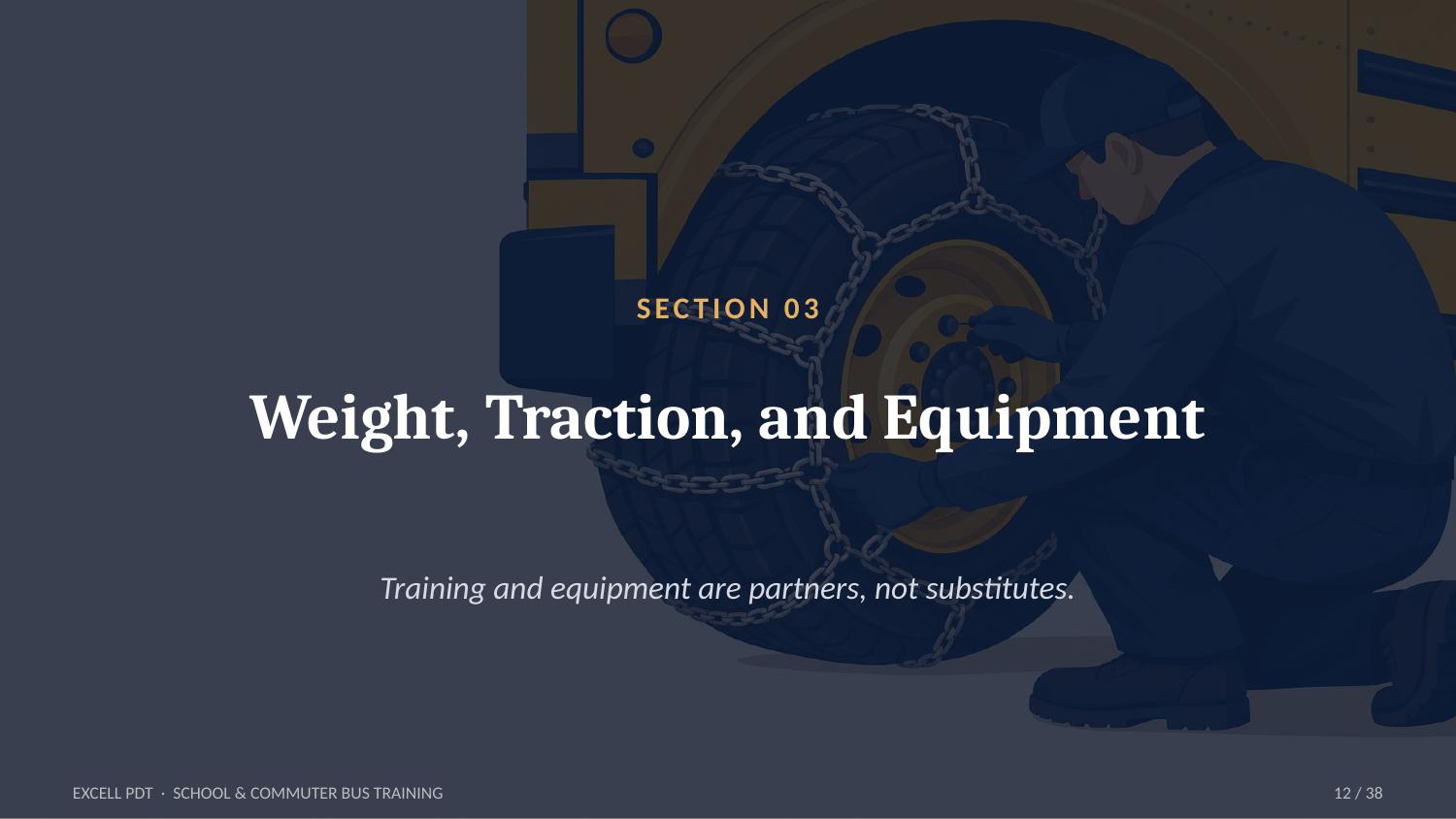
Next, we will look at weight, traction, and equipment. Training and equipment are partners, not substitutes. The way a bus carries its weight changes how it grips, brakes, and responds in poor weather. The equipment you use must fit the vehicle and be ready before the conditions demand it. This section will help you connect bus design, seasonal preparation, road surface, wind, and the driving inputs you control.
The goal is to understand where traction comes from, where it disappears, and how to avoid asking more of the tires than they can provide.
Know Your Vehicle's Weight Distribution
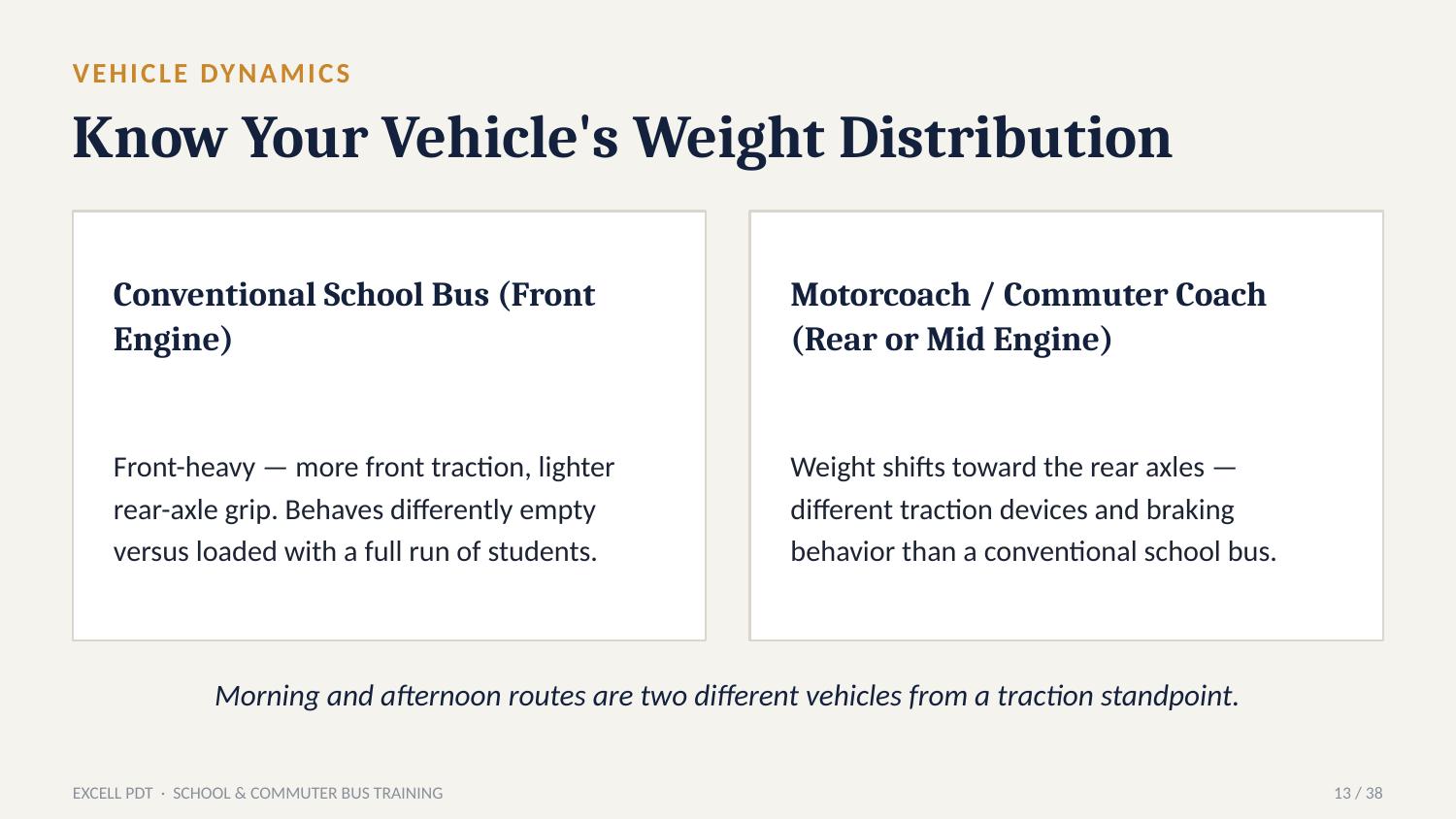
Know how your vehicle distributes weight because a school bus and a commuter coach do not behave the same way. A conventional front-engine school bus is front-heavy. It has more front traction and lighter rear axle grip, and it behaves differently empty than it does with a full run of students. A motor coach or commuter coach with a rear or mid-engine shifts more weight toward the rear axles.
That changes both traction device needs and braking behavior. Think of morning and afternoon routes as two different vehicles from a traction standpoint. Passenger load changes the weight on the axles, so your inputs and your expectations must change with it.
Traction Devices Are Part of Pre-Season Prep
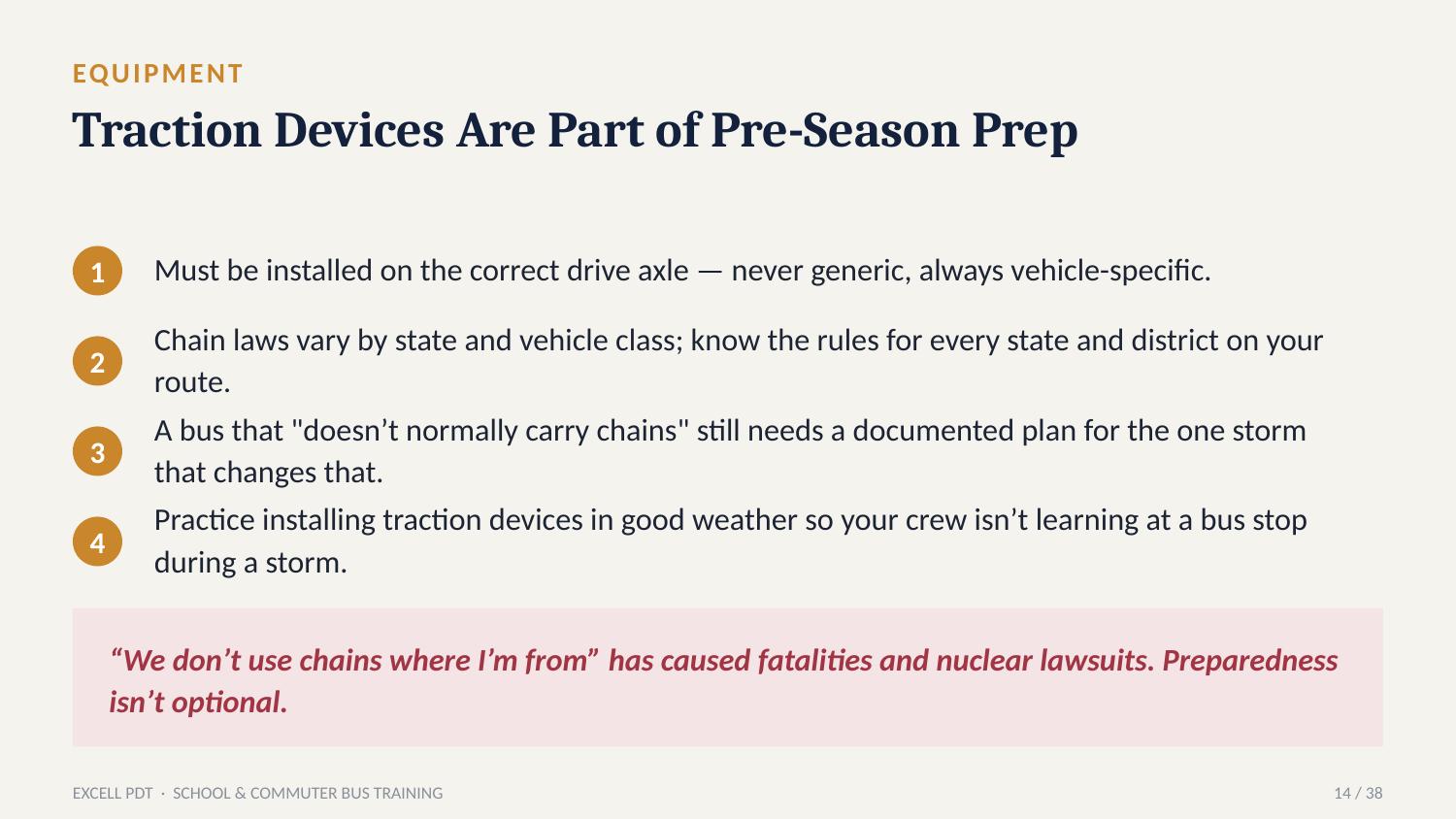
Traction devices are part of pre-season preparation, not an afterthought when a storm arrives. Devices must be installed on the correct drive axle. They are never generic, they must be vehicle specific. Chain laws vary by state and vehicle class, so know the requirements for every state and district on your route. Even a bus that does not normally carry chains needs a documented plan for the one storm that changes that.
Practice installing traction devices in good weather. Your crew should not be learning at a bus stop during a storm. Preparedness is not optional, and assuming chains are unnecessary has led to fatalities and nuclear lawsuits.
External Forces You Cannot Control
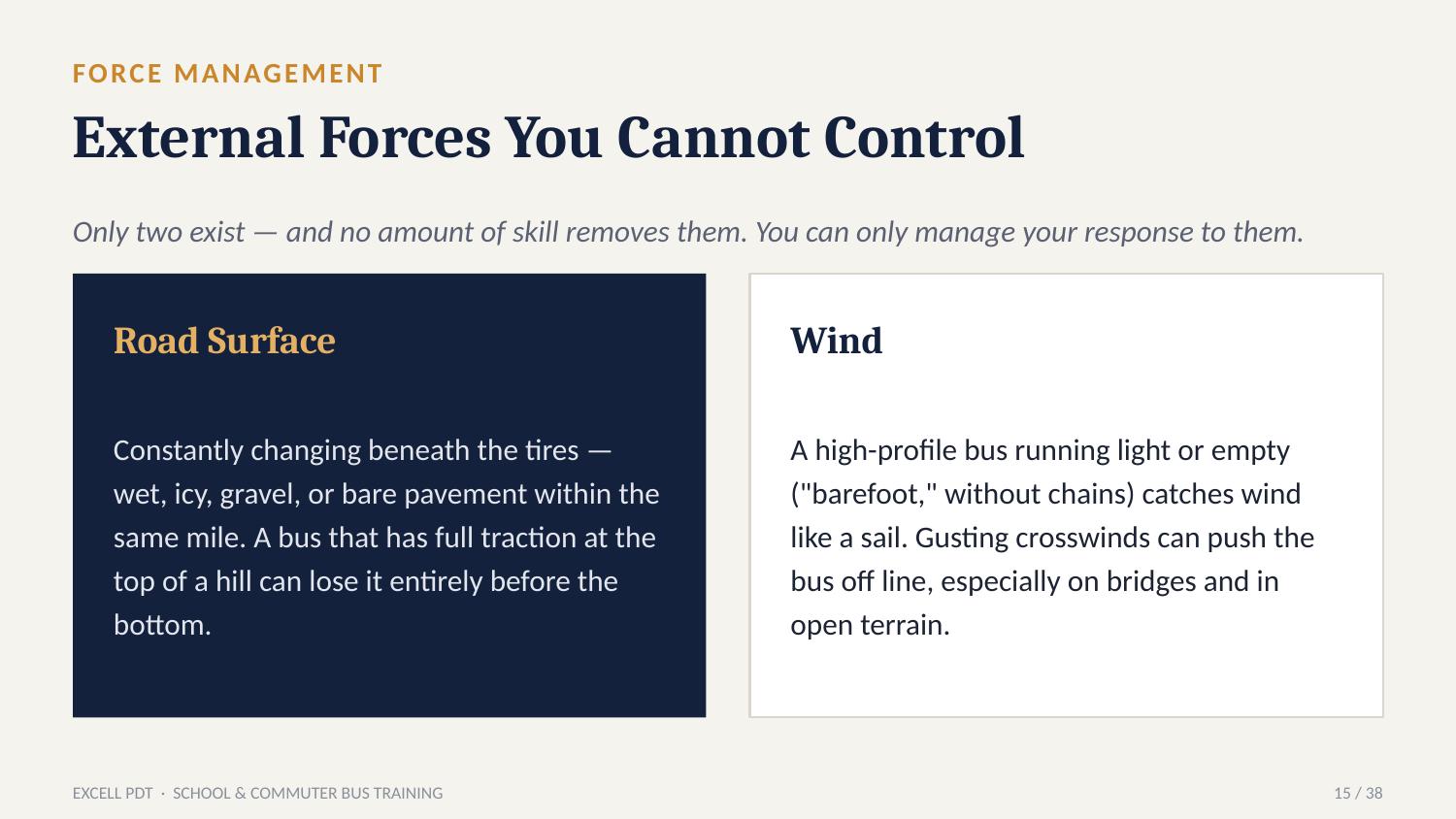
There are only two external forces you cannot control, road surface and wind. No amount of skill removes them, you can only manage your response. Road surface can change beneath the tires within the same mile, from wet to icy, gravel or bare pavement. A bus that has full traction at the top of a hill can lose it entirely before the bottom. Wind matters too. A high profile bus that is light or empty or running “barefoot,” without chains catches wind like a sail.
Gusting crosswinds can push it off line, especially on bridges and in open terrain. Read both forces early and adjust before they surprise you.
Internal Forces You Control
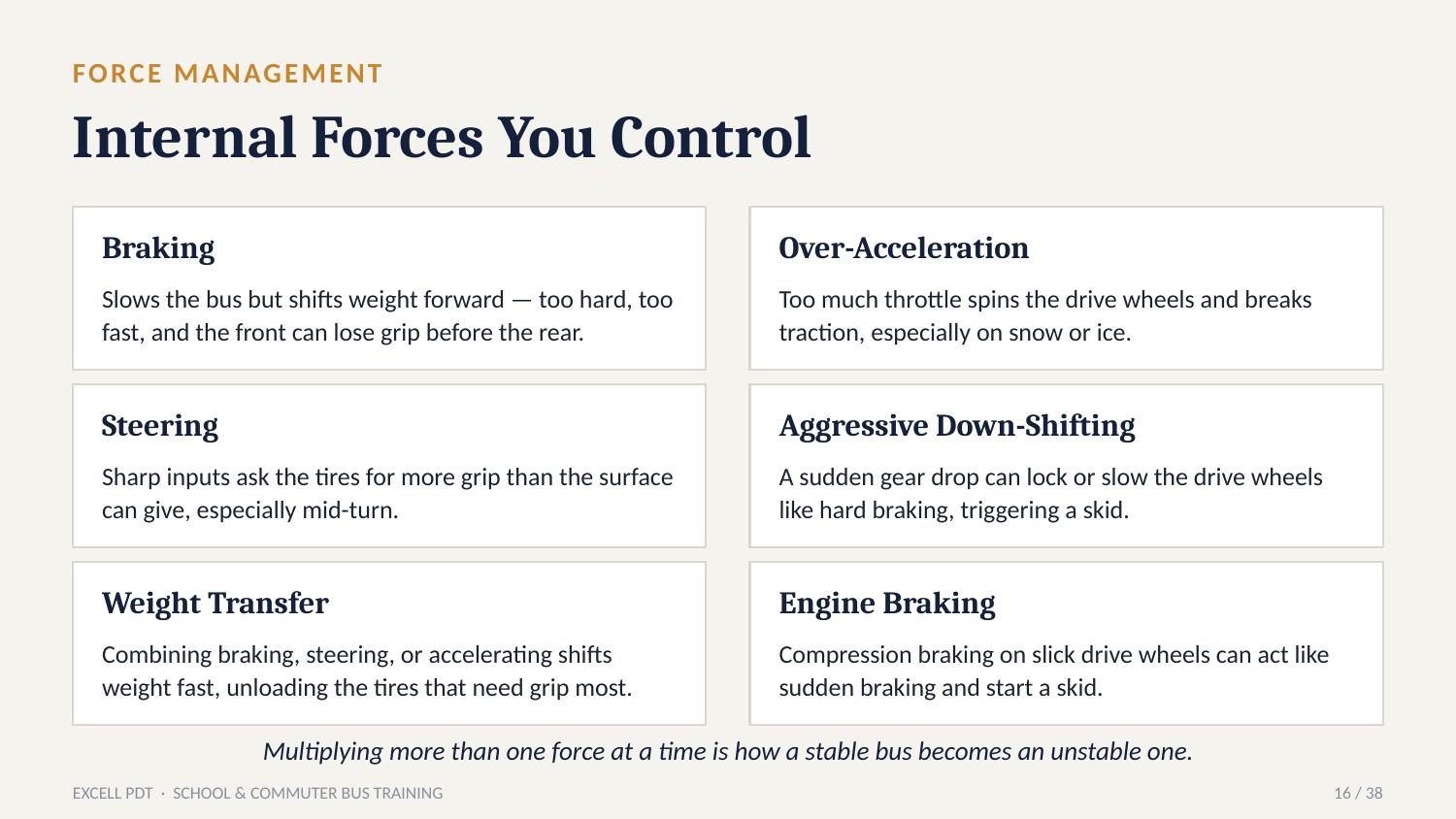
The forces you control are the inputs you make behind the wheel. Braking slows the bus but shifts weight forward. If it is too hard or too fast, the front can lose grip before the rear. Over-acceleration can spin the drive wheels and break traction. Sharp steering inputs can demand more grip than the surface can give, especially in a turn. Aggressive downshifting can lock or slow the drive wheels like hard braking and trigger a skid.
Combining braking, steering, or acceleration creates rapid weight transfer and unloads tires that need grip. Engine braking can also act like sudden braking on slick drive wheels. Multiplying forces is how a stable bus becomes unstable.
The Rule of Two
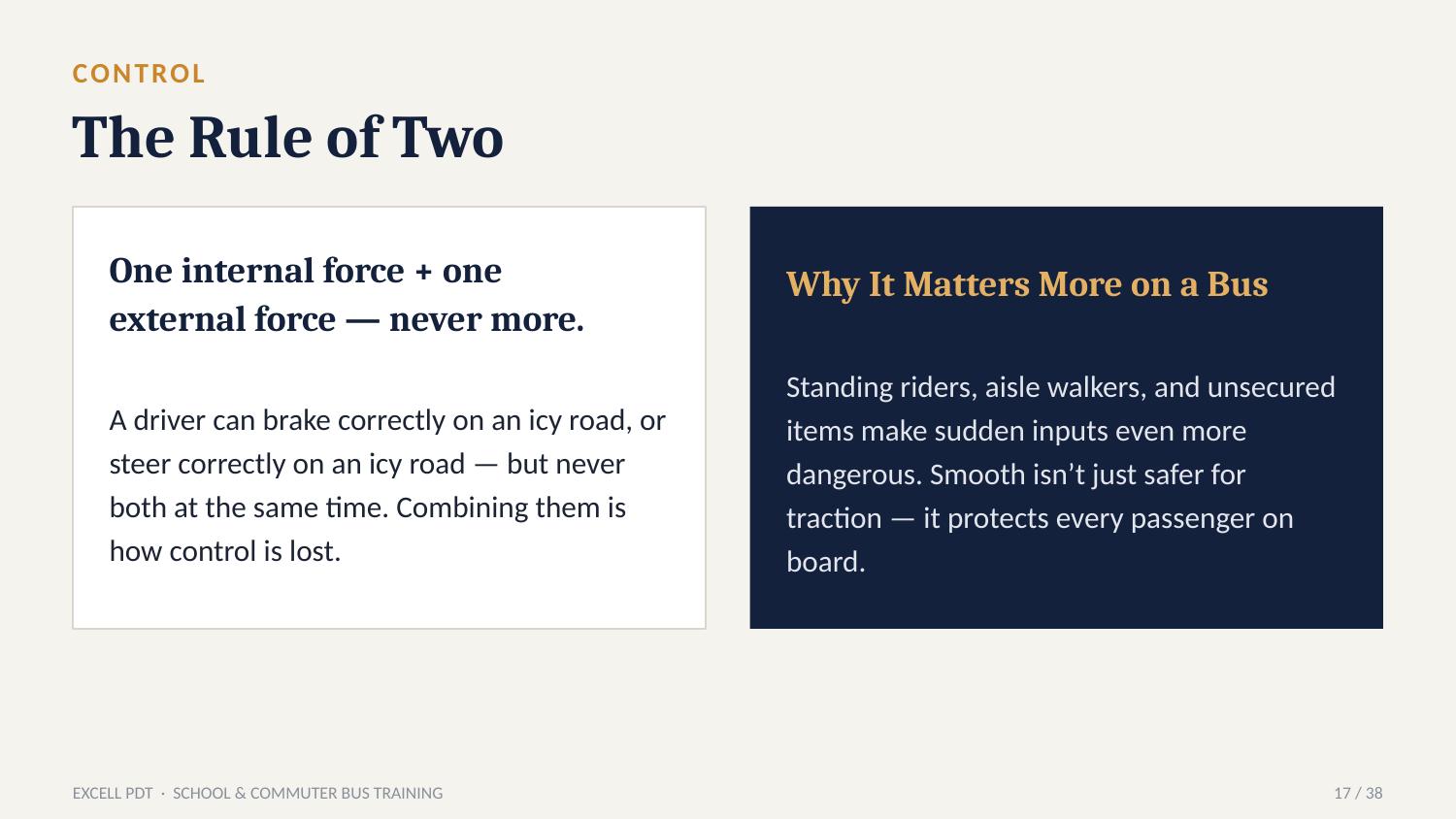
One internal force plus one external force, never more. On an icy road, you can brake correctly or steer correctly, but not both at the same time. Combining those actions is how control is lost. This rule matters even more on a bus because passengers may be standing, walking the aisle, or near unsecured items. A sudden input can create an injury even if the bus stays upright. Smooth driving is not only a traction strategy, it protects every person on board.
Give yourself enough time and space to make one controlled input in response to the surface instead of stacking actions when the margin disappears.
Correct Braking, ABS, and the Degree of Fault Law
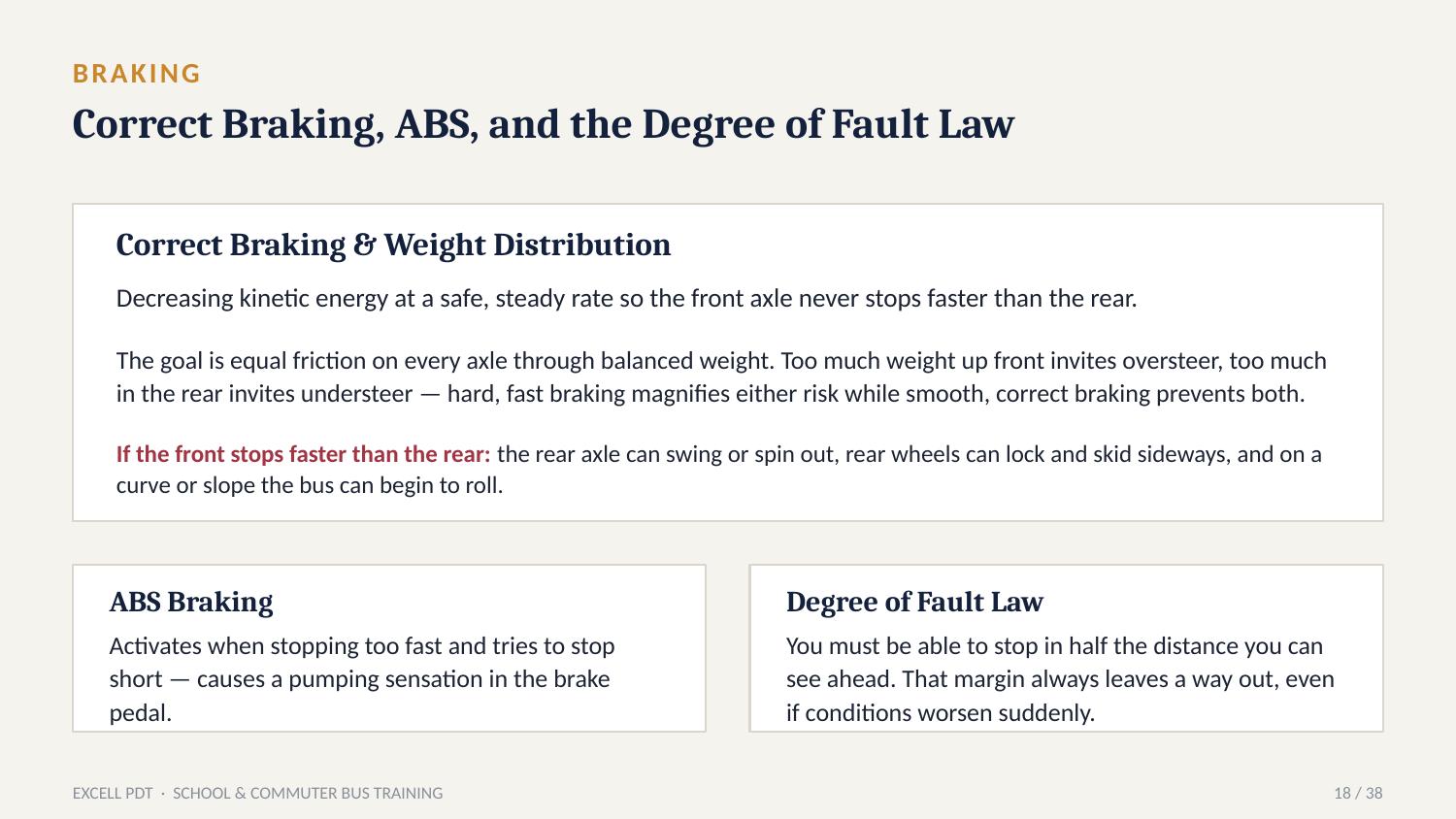
Let’s cover braking in detail. Correct braking decreases kinetic energy at a safe, steady rate so the front axle never stops faster than the rear. The goal is equal friction on every axle through balanced weight. Too much weight up front invites oversteer, and too much weight in the rear invites understeer, and hard, fast braking magnifies either risk, while smooth, correct braking prevents both.
If the front stops faster than the rear, the rear axle can swing or spin out. Rear wheels can lock and skid sideways, and on a curve or slope, the bus can begin to roll. ABS activates when you are stopping too fast and tries to stop short, that is the pumping sensation in the brake pedal. Apply the degree of fault law. You must be able to stop in half the distance you can see ahead.
That margin always leaves you a way out, even if conditions worsen suddenly.